İftar bilgisi yükleniyor...İftar --:--:--Hava yükleniyor...--.----:--:--

Bilim insanları Rett sendromunda sızdıran beyin kan damarlarının genetiğini keşfetti
Bilim insanları Rett sendromunda sızdıran beyin kan damarlarının genetiğini keşfetti

MIT araştırmacılarının çalışması, sorunun aşırı mikroRNA ifadesine yol açan genetik mutasyonlardan kaynaklandığını göstererek potansiyel bir tedaviye işaret ediyor.

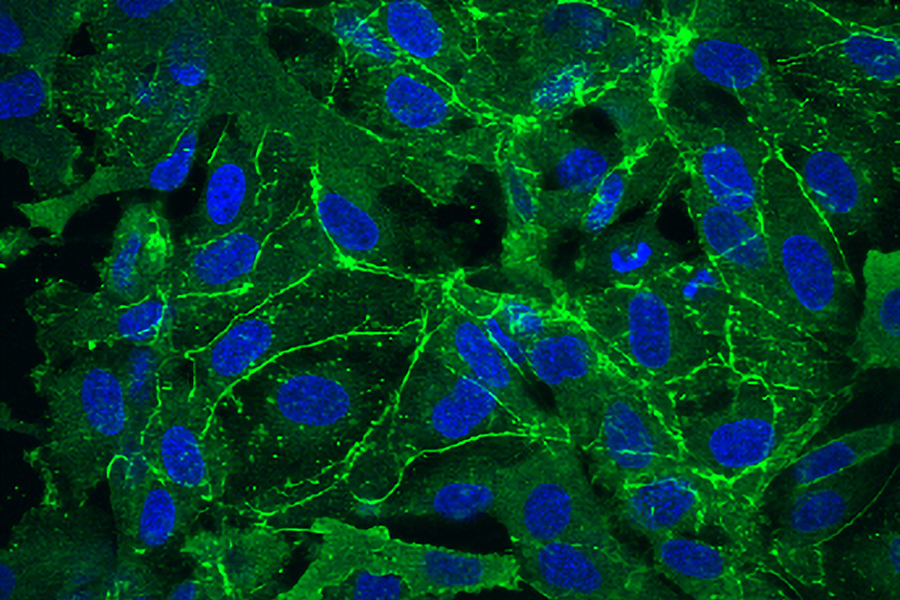
MIT researchers have found that two common genetic mutations responsible for Rett syndrome trigger a series of molecular events that weaken the structural integrity of developing brain blood vessels, causing them to become leaky. The study identifies the overexpression of a specific microRNA (miRNA-126-3p) as the underlying issue and demonstrates that reducing the levels of this microRNA can help correct the vascular defect. Rett syndrome is a severe developmental disorder that impacts both the brain and body, caused by various mutations in the widely expressed MECP2 gene. Symptoms typically appear when affected children, mostly girls, are between 2 and 3 years old. This period is crucial for brain blood vessel development, prompting neuroscientists at The Picower Institute for Learning and Memory at MIT to investigate how two common but distinct MeCP2 mutations might influence vascular development and contribute to the disease's serious neurological effects. In research recently published in *Molecular Psychiatry*, lead author Tatsuya Osaki and senior author Mriganka Sur developed advanced human tissue cultures to model blood vessel development, both with and without the MeCP2 mutations. These cultures allowed the researchers to observe the mutations' effects on the vessels and to molecularly analyze the issues they discovered, ultimately testing an intervention that proved beneficial. Sur, the Newton Professor of Neuroscience at the Picower Institute and MIT’s Department of Brain and Cognitive Sciences, noted, “While a role for microRNAs in Rett syndrome has been established, demonstrating that miRNA-126-3p is downstream of MeCP2 and directly involved in endothelial cell dysfunction is a significant advancement in understanding Rett syndrome.” Building on years of tissue engineering experience, including time spent as a postdoc in the lab of co-author Roger D. Kamm, Osaki created “3-dimensional microvascular networks” using human induced pluripotent stem cells (iPS cells) from Rett syndrome patients. These cells were transformed into stem cells and then into endothelial cells, which are essential for blood vessel formation. The endothelial cells self-assembled into tube-like networks when embedded in a gel and mixed with fibroblast cells, which Osaki connected to microfluidics for circulation. One set of cultures contained the R306C mutation, while a genetically identical control culture lacked this mutation. Another set had the R168X mutation, paired with a control culture created using CRISPR technology. The researchers chose these mutations because they are relatively common and affect the MECP2 gene differently. Their findings indicate that both mutations lead to increased levels of miRNA-126-3p, compromising blood vessel integrity and suggesting that vascular issues are a key aspect of the disease. Sur remarked, “There is something common across these mutations.” Specifically, lab tests revealed that vessels with either mutation exhibited reduced levels of a protein called ZO-1, which is crucial for maintaining tight junctions between endothelial cells in blood vessels. This reduction in ZO-1 expression resulted in leakier vessels compared to the controls. Similar deficiencies were observed in another cell culture where astrocyte cells were added to better mimic the blood-brain barrier (BBB), which regulates the movement of substances between blood vessels and the brain. Problems with the BBB are believed to contribute to neurodegenerative diseases such as Alzheimer’s, Huntington’s, and ALS. To explore how vascular issues might affect neural function in Rett syndrome, the researchers exposed neurons to the medium from their Rett vasculature cultures. The neurons exhibited decreased electrical activity, suggesting that substances secreted by the Rett endothelial cells disrupted their function. Typically, MeCP2 represses the expression of other genes. The scientists expected that mutations in MeCP2 would lead to the overexpression of many genes; however, ZO-1 was downregulated. Osaki suspected that miRNAs, which regulate gene expression, might explain this discrepancy. “We hypothesized that there should be a mediator between the MeCP2 mutation and the downregulation of ZO-1, as well as the increase in BBB permeability,” Osaki explained. “We focused on the microRNAs.” By profiling miRNAs in the Rett cultures and controls, the researchers found that miRNA-126-3p was overexpressed. Sequencing RNA revealed additional molecular pathways necessary for maintaining vascular integrity that were disrupted in the Rett cultures. To obtain more definitive evidence, the researchers treated the Rett-mutation cultures with an “antisense” molecule that reduces miRNA-126-3p levels. This treatment led to an increase in ZO-1 expression and a partial restoration of endothelial cell barrier function, resulting in less leakiness in the vessel cultures. Reducing the miRNA expression also restored the molecular pathways to healthier states. Interestingly, a drug called miRisten, which inhibits miR-126, is currently undergoing clinical testing for leukemia. Osaki and Sur plan to test this drug on mice modeling Rett syndrome to assess its potential benefits. The study's co-authors include Zhengpeng Wan, Koji Haratani, Ylliah Jin, Marco Campisi, and David Barbie. Funding for the research was provided by the National Institutes of Health, a MURI grant, The Freedom Together Foundation, and the Simons Center for the Social Brain.